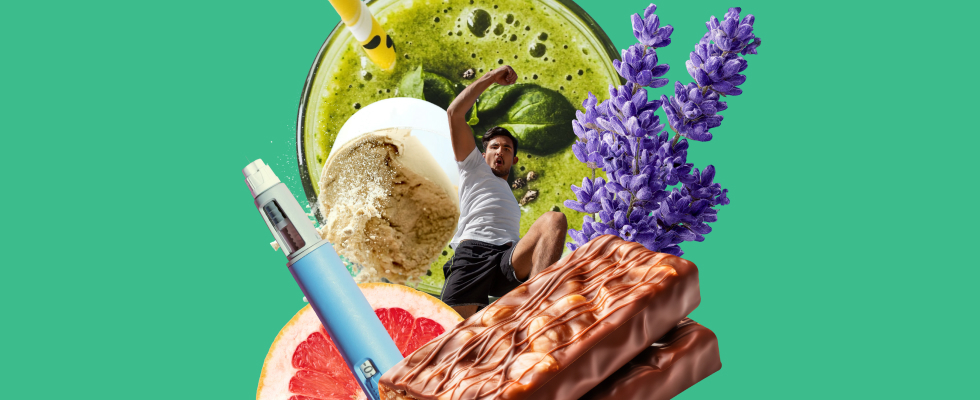
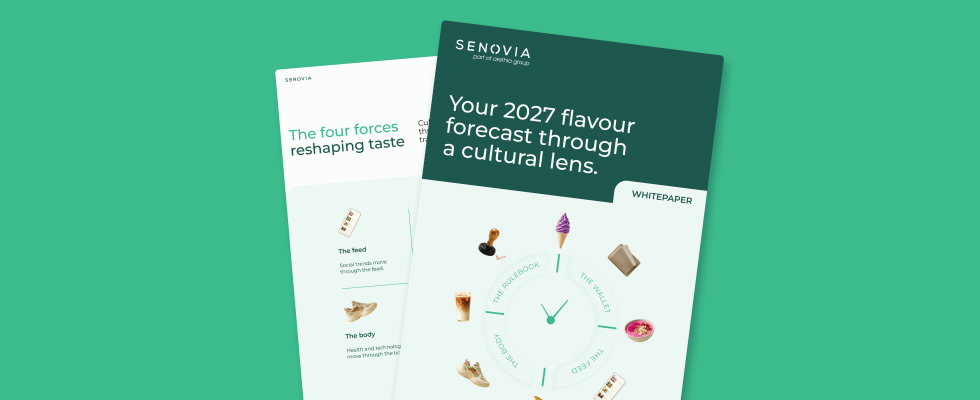
Senovia’s latest white paper, Your 2027 flavour forecast through a cultural lens, opens on an uncomfortable truth: the industry, as it works today, can’t keep up with the speed of the market.
In the past, a flavour needed decades to travel from niche to shelf expectation. Now it can manage the same trip in a single season. Shrinking trend timelines are the real problem facing sweet food and drink, because most brands still source flavour in a way that no longer meets market expectations.
A profile goes mainstream before the data calls it a trend
A flavour shows up in a social media feed on Tuesday, clears the ingredient off the shelf in a week, and becomes cultural momentum. None of this shows up in the market data for months. But by the time the figures confirm the hype, shoppers already expect to find the recent trends among your products.
 Taste runs on two clocks, and the old catalogue model can’t
catch up
The white paper frames the acceleration as two clocks running at once, and a fixed catalogue struggles with both:
- The fast clock is the viral cycle that peaks in weeks. Briefing, sampling, and sign-off of a new catalogue addition can take longer than the trend lasts.
- The deep clock is the slower shift in health, money, identity, and regulation that takes years to settle. Signals are faint and slow enough to be neglected, so most catalogues wait for proof. When the proof is there, the lead has already gone to whoever moved first.
The result repeats itself: the product hits the market a season late, chasing a moment that’s already peaked or trailing behind the first-movers.
Co-development is the only way to keep pace
If taste evolves faster than the next flavour brief, the work can’t start once the consumer is already looking for the product on your shelf. It has to start sooner.
In practice, that means a flavour house doing four things:
- reading the signals while they’re still forming
- analysing the forces behind them and forming a clear view of where they lead
- working continuously with a brand’s own product and innovation teams
- developing the flavour inside the brand’s product context, ahead of the request
This way, when the momentum arrives, development is already underway. Flavours are ready to refine and perform in the formats they are actually going into.
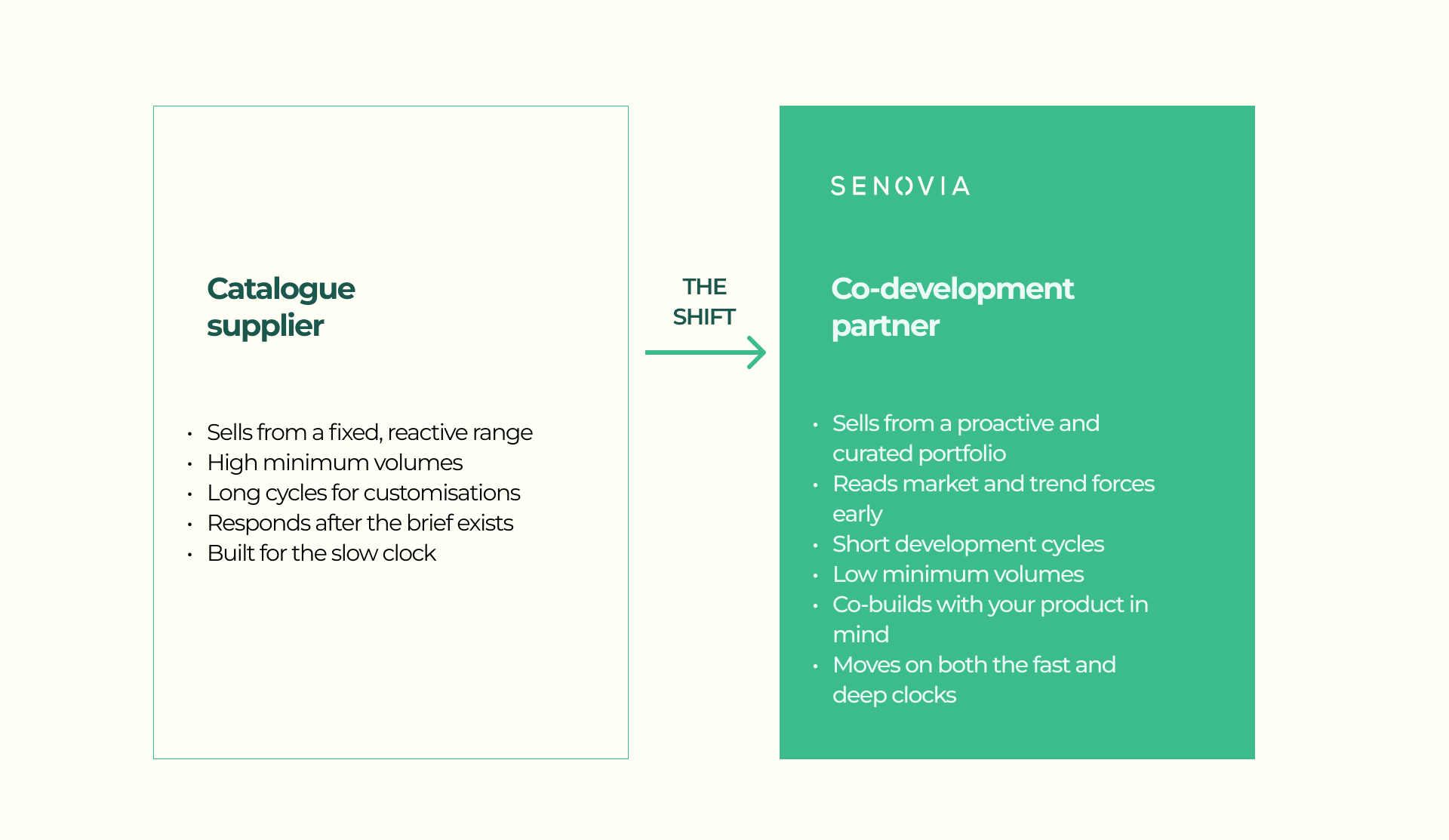
The model above means moving from flavour supplier to co-developer. A supplier sends the nearest match in its library, then waits for the next order. But a co-developer has already started on the profile your category will reach for next, because it has already anticipated where the category is heading.
 What anticipation actually takes
Three things make that reading hard. As an illustrative example, GLP-1s tests all of them.
- Attention. The signal isn’t in what competitors launch. It’s in the forces upstream of any product. GLP-1 was catchable there early, while it was still a diabetes drug with off-label demand. By late 2025, with one in eight US adults on a weight-loss drug and the story on tabloid covers, it was obvious. But in product development, obvious means late. Attention means catching the shift before it’s news.
- Interpretation. Working out what a signal means for flavour is the hard part, and it only pays off while the window to act is still open. GLP-1s dull the palate and shrink portions, so sweetness now must register in a couple of bites. That was the consequence few saw coming, and it stays below the surface until the products are already on shelf.
- Range. The force reshaping a drink is often the same one reshaping gummy candy, so competitive intelligence means watching shopping aisles with no obvious link to yours. However, GLP-1s reshape all categories at once. Seeing it coming meant tracking the drug’s uptake, the shift in regulations and what households buy, and the taste-perception research together. Three streams, none of them a flavour brief, and few brands watch all three.
 Senovia triangulates the signals streams
Teams watching culture, health, regulation and budgets across every category give Senovia the attention and the range. Seventy years of flavour craft give it the interpretation: knowing what a signal means at the bench, and turning it into a profile ready for your format while the window is still open.
Your 2027 flavour forecast through a cultural lens sets out where taste is heading, and what it asks of your next brief. Download the report here.